Actualités · Mandarin Oriental· (English original)
Mandarin Oriental Vienna: Secessionist Grandeur Reimagined
The Mandarin Oriental, Vienna, which opened in November 2025, revives a 1908 courthouse with a design ethos deeply rooted in Vienna Secessionism. This new establishment offers a contemporary counterpoint to the city's established grande dames.
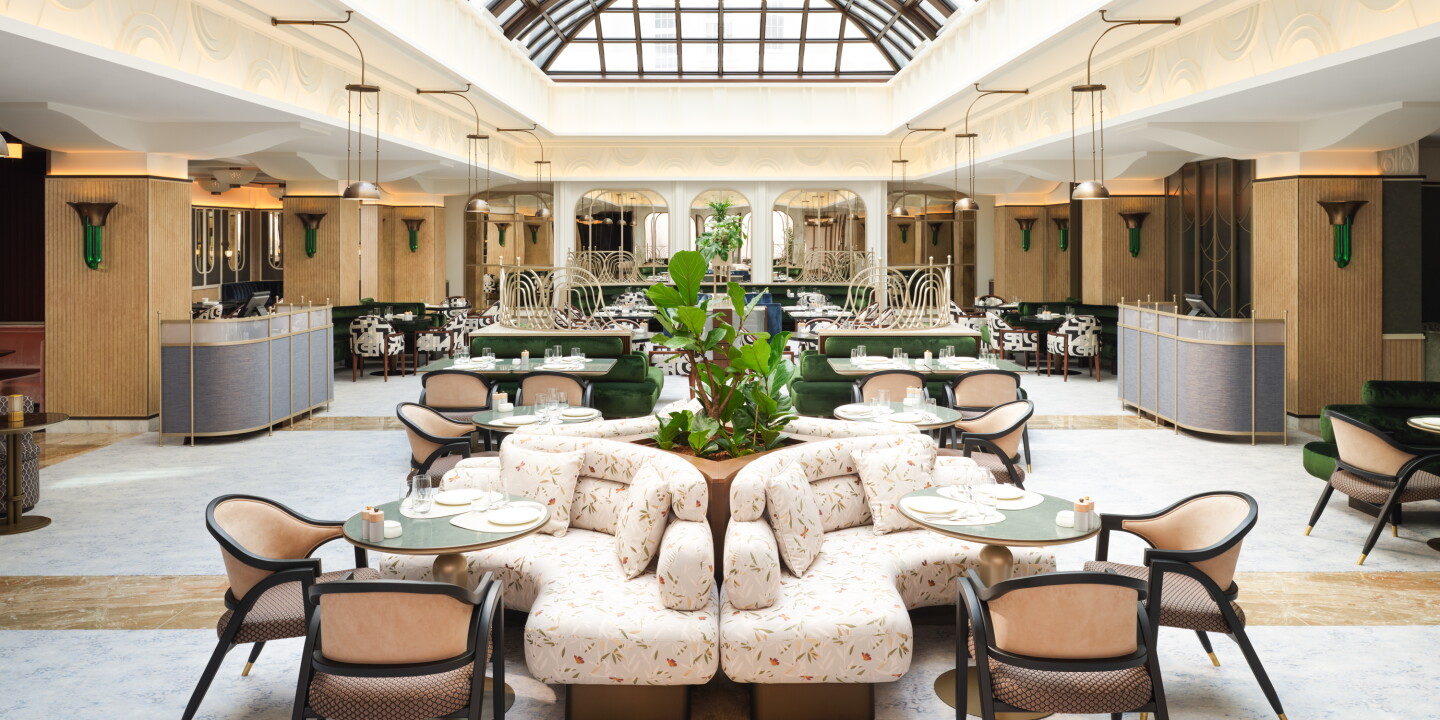
A modern white and light wood lobby with banquettes, a curved glass atrium, and subtle Secessionist design elements.

The Mandarin Oriental, Vienna, inaugurated in November 2025, marks a significant addition to the city's luxury hospitality landscape. Housed within a meticulously restored 1908 courthouse designed by Austrian architect Alfred Keller, this 138-key property is positioned to offer a distinctive experience in the Austrian capital.
Https://www.afar.com/authors/anya-von-bremzen of AFAR Media writes that the hotel 'draws on the Austrian capital’s secessionist heritage for a contemporary alternative to its Habsburg-era grandes dames.' She notes the hotel’s ability to combine 'a deep sense of history' with 'discreet residential vibes,' alongside four distinct dining venues and the brand’s signature Asian-inspired spa treatments. Https://www.afar.com/authors/anya-von-bremzen observes that the hotel blends 'the best of all worlds' when compared to Vienna's traditional lavish historic hotels or its more intimate boutique offerings.
The transformation was a six-year undertaking by the London and Portugal-based firm Goddard Littlefair, tasked with respectfully revitalizing the listed Secessionist edifice. Https://www.afar.com/authors/anya-von-bremzen recounts that their work, 'a blend of meticulous restoration and period-inspired contemporary flair,' was immediately evident upon entering the vestibule, where a columned arch frames a restored ceremonial staircase. Overhead, a chandelier composed of 'surging glass globes on brass poles evoked champagne fizzing to the coffered ceiling.'
Throughout the property, design elements pay homage to Viennese art and design. Https://www.afar.com/authors/anya-von-bremzen points out that a smaller version of the effervescent chandelier appears in the reception lounge, which features custom furnishings echoing Secessionist aesthetics. Behind the reception desk, a bead-crystal-gold-cord embroidery by Fameed Khalique, interpreted by Https://www.afar.com/authors/anya-von-bremzen, references the glasswork of Koloman Moser and the golden mosaics of Gustav Klimt. This piece is a highlight of the 400-plus contemporary art collection, curated by Minda Dowling, which predominantly showcases female artists.
The interiors are rendered in a sophisticated palette of soft gray and creamy off-white, accented with touches of light blue and dusky pink. Materials include marble and Pannonian oak parquet. Custom corridor carpeting subtly incorporates Secessionist checkerboard and fan-like motifs, while a 'graceful, spindly pattern' along the walls recalls the floral whorls present on the building's restored facade, emphasizing Secessionism's role as a precursor to Art Deco, Https://www.afar.com/authors/anya-von-bremzen concludes.
Our take: The Mandarin Oriental's entry into Vienna with such a historically resonant yet thoroughly contemporary design signals a nuanced evolution in luxury hospitality. While many brands favor new builds, the commitment to restoring a landmark and integrating its original artistic movement so deeply into the guest experience speaks to a discerning appreciation for local context. The focus on a curated art collection by female artists further elevates the property beyond mere aesthetic appeal, aligning with a broader industry trend toward cultural integration and purposeful design.
Source : AFAR Media
Partager cet article