News · Mandarin Oriental
Miami's Former Mandarin Oriental Demolished for New Ultra-Luxury Towers
The 23-storey hotel on Brickell Key was imploded in April 2026, marking a pivotal moment in the city's luxury development landscape. This demolition paves the way for a new generation of sophisticated hospitality and residential offerings.
Courtesy of Mandarin Oriental
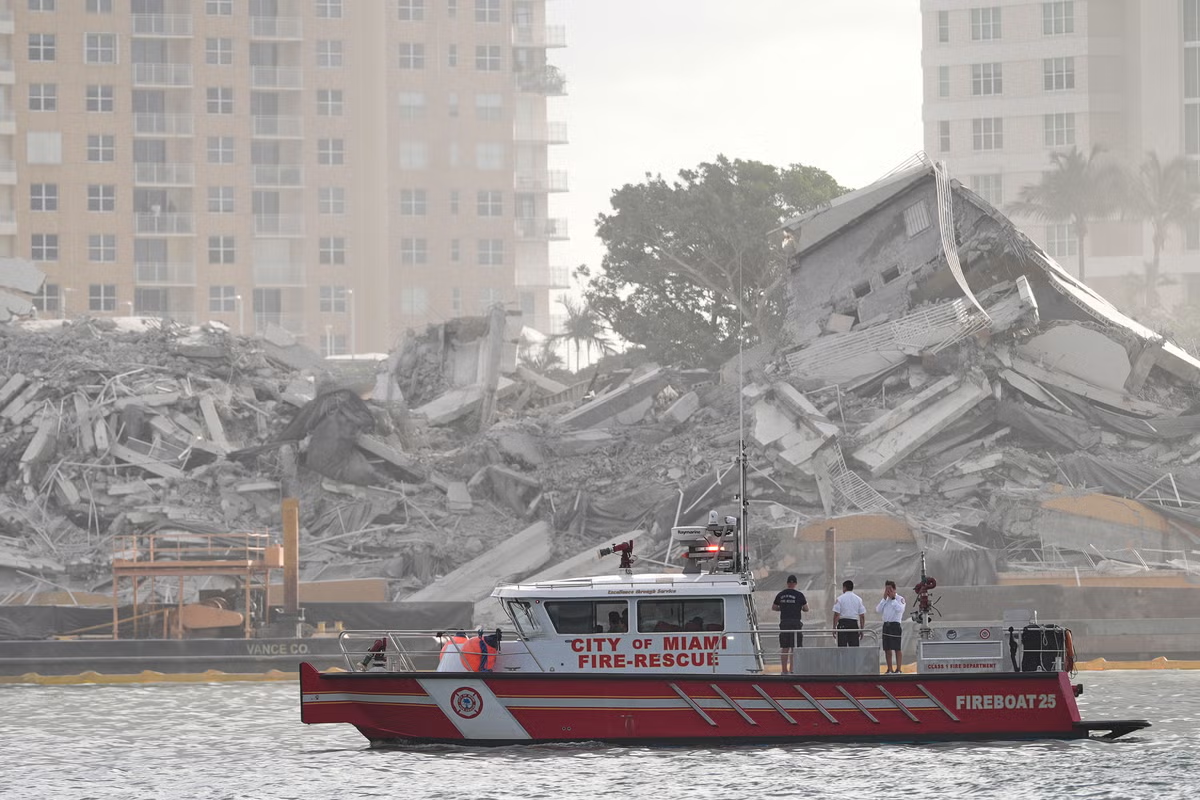
On April 13, 2026, the venerable 23-storey edifice that once housed the Mandarin Oriental, Miami, was summarily demolished via controlled implosion. Situated on Brickell Key, a man-made island at the confluence of the Miami River and Biscayne Bay, this event marks a significant transition in one of Miami's most exclusive districts, making way for an ambitious new development slated for completion in 2030.
According to The Independent, the building, inaugurated a quarter-century prior, collapsed in less than 20 seconds. This implosion, described by the outlet as the largest in Miami in over a decade, followed a series of precise blasts around 8:30am. Spectators, observing from a safe remove, reportedly cheered and documented the event on their mobile devices as the structure's framework rapidly yielded. The Independent notes that a cloud of dust subsequently enveloped the area, prompting some onlookers to don face masks as they departed.
The Independent further reports that residents within a 244-meter radius of the site were advised to remain indoors, ensuring all windows and doors were secured during the demolition. Swire Properties, the developer overseeing the project, confirmed to the outlet that this demolition is preparatory for 'The Residences at Mandarin Oriental, Miami' — a twin-tower ultra-luxury hotel and residential complex. The decision to utilise an implosion, The Independent highlights, was the culmination of nearly two years of meticulous planning and coordination with specialist contractors and local authorities, chosen for its efficiency and safety in adherence to the project's timeline and the well-being of the Brickell Key community.
Our take: This development underscores a broader trend we have observed in global luxury real estate: the strategic re-evaluation and intensification of prime urban waterfront sites. Properties that once defined luxury are now being reimagined to meet contemporary desires for enhanced scale, augmented amenities, and an even more pronounced sense of exclusivity. The 'ultra-luxury' designation for the forthcoming towers suggests a market that continues to push boundaries, prioritising bespoke experiences and private residency above all else.
The sheer scale of the new development, described as 'two-tower ultraluxury', signals an embrace of vertical living with comprehensive amenities that often now include private marinas, curated art collections, and expansive wellness facilities. While the former Mandarin Oriental held its own distinct charm, the promise of a future-forward complex aims to capture a discerning clientele seeking the pinnacle of urban resort living. We will continue to monitor the architectural and experiential details as they emerge, particularly any signature wellness offerings or culinary concepts.
Source : The Independent
Share this story