Why the Serengeti is the Best Place to See Black Rhinos
[Learn more](https://www.fourseasons.com/magazine/from-the-magazine/black-rhino-serengeti/)
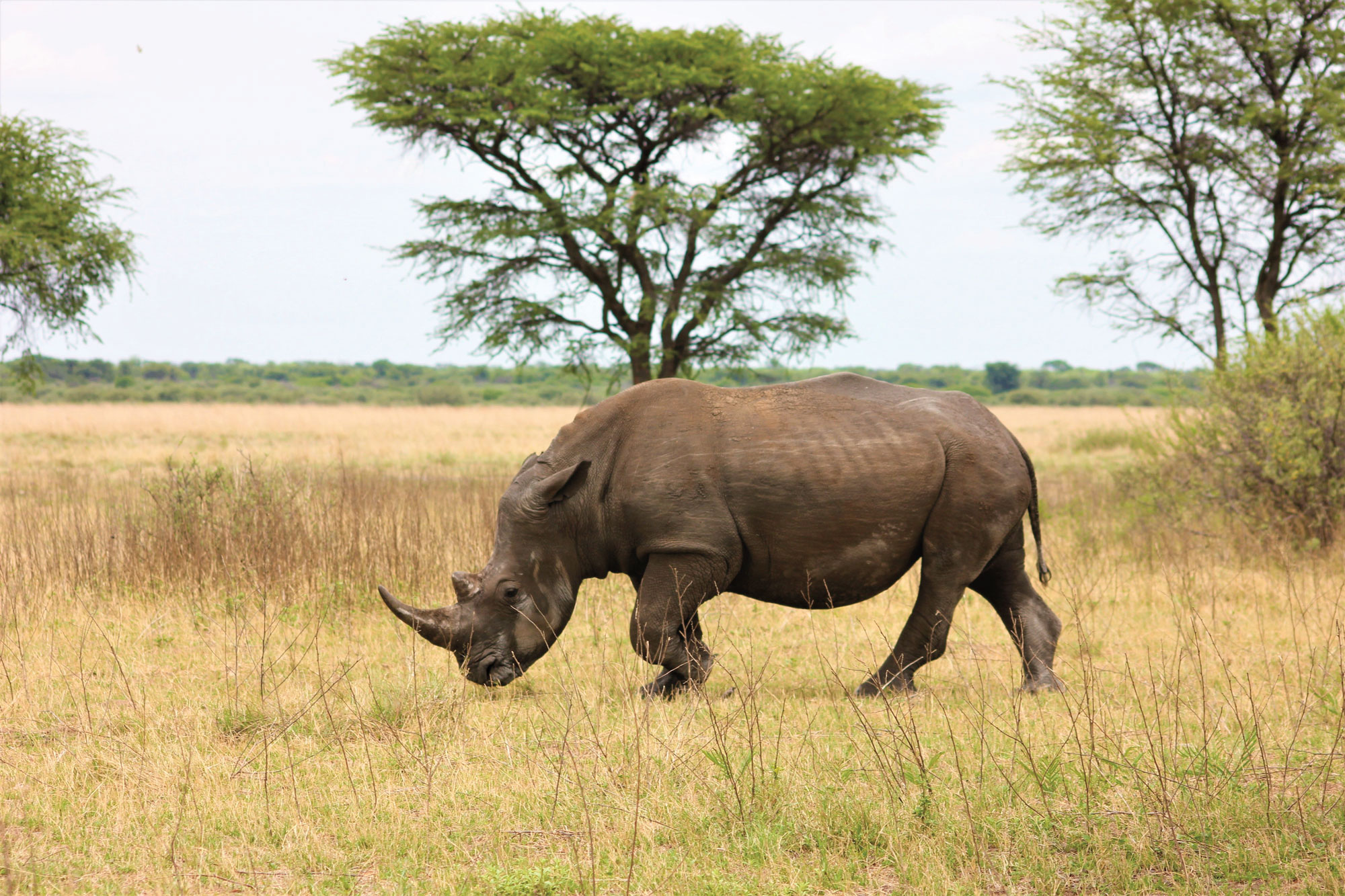
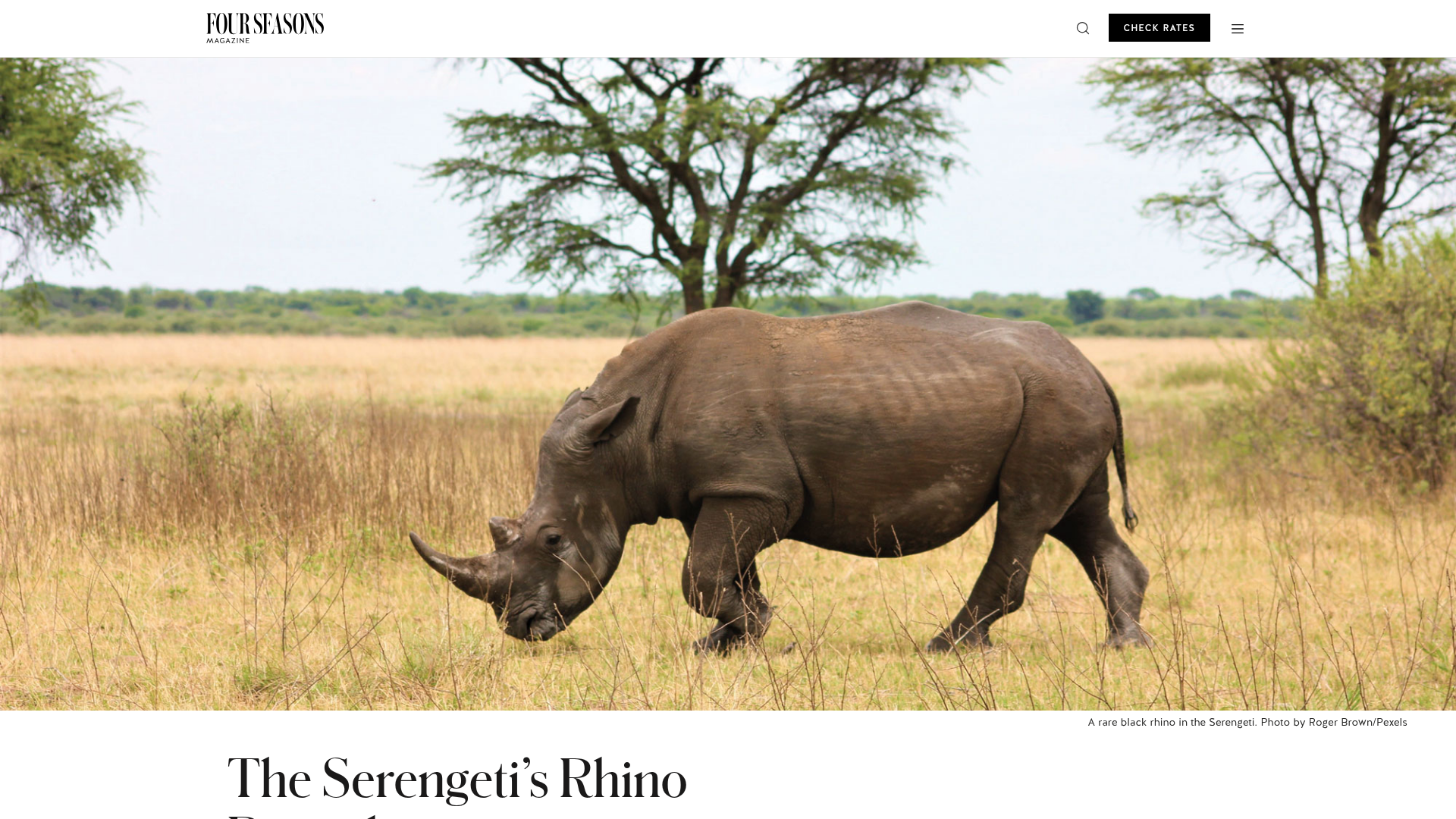
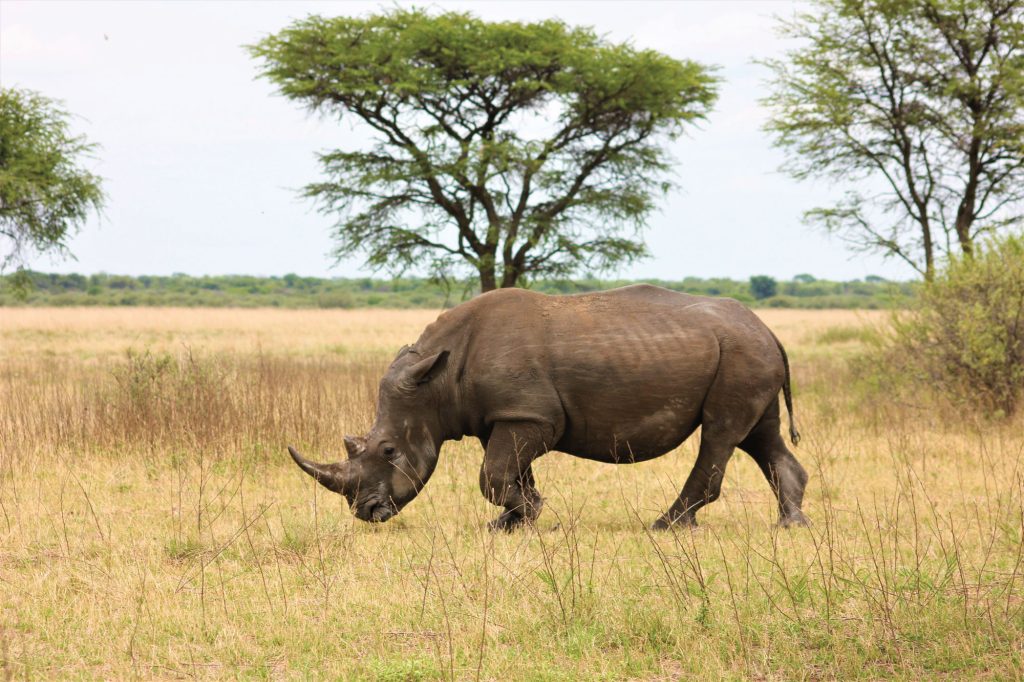
A rare black rhino in the Serengeti. Photo by Roger Brown/Pexels
Tanzania’s endangered black rhinoceroses are making a historic comeback.
[From The Magazine](https://www.fourseasons.com/magazine/from-the-magazine/)
In the Serengeti, or _Siringet_, which means “endless plains” in the Maasai language, acacia trees dot Tanzania’s first national park like verdant umbrellas. This dramatic landscape is the ideal locale in which to try to see the famed Big Five: lion, elephant, rhino, leopard, and Cape buffalo.
And now you have a better chance of spotting the rarest of the bunch: the black rhino. Once numbering around 700, poaching left just three survivors in the Serengeti by the 1990s, but conservation efforts have restored the country’s population to roughly 270, with more than 50 in the Serengeti.
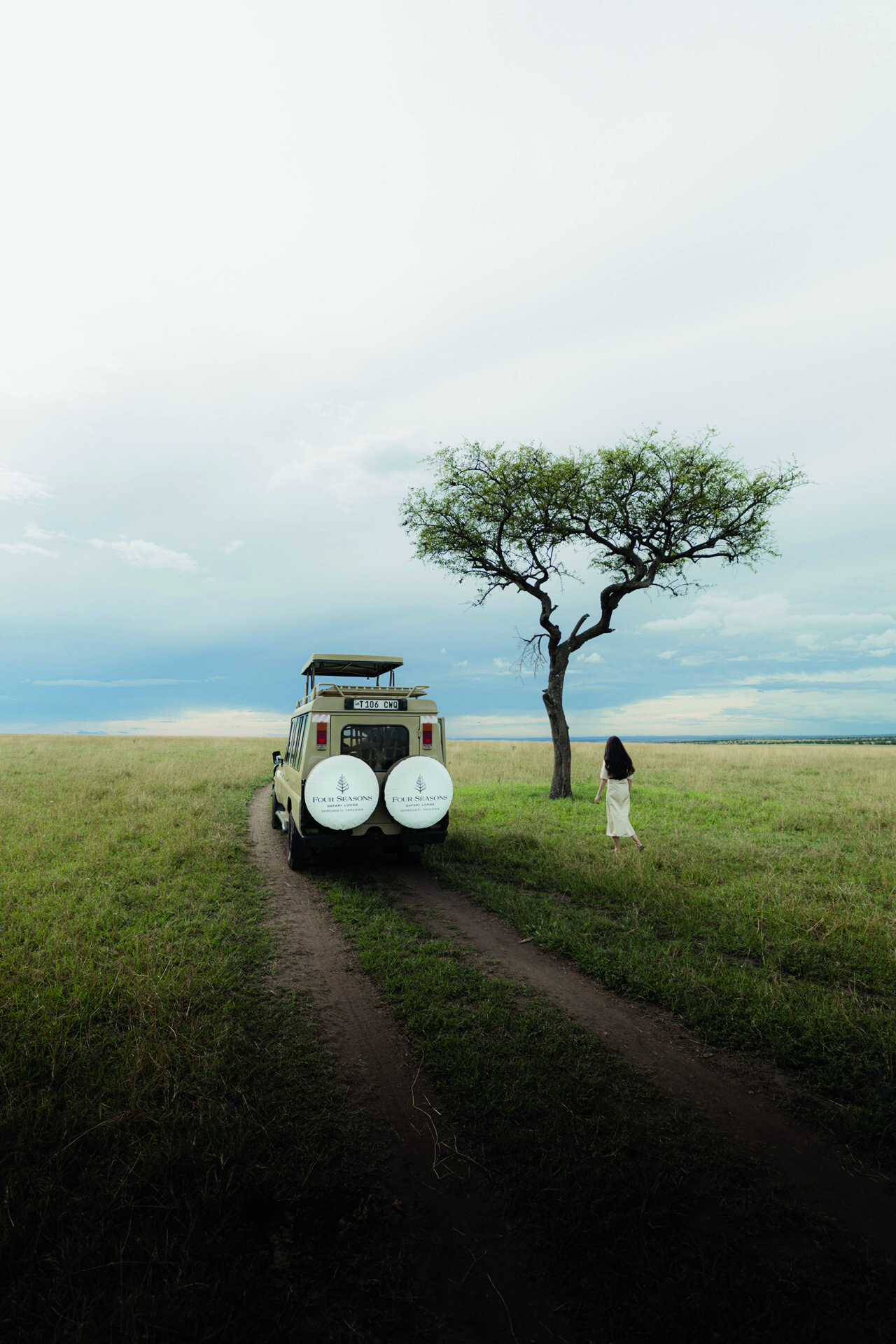Expedition vehicles from Four Seasons Safari Lodge Serengeti transport guests on half- and full-day safaris.
It helps to have a guide like Philip Bet, of [Micato Luxury Safaris](https://www.micato.com/), whose well-trained eyes can detect movement in the grass from a distance of 50 yards.
But you don’t have to go on safari to see wildlife if you’re staying at [Four Seasons Safari Lodge Serengeti](https://www.fourseasons.com/serengeti/). A watering hole adjacent to the pool draws elephants, zebras, baboons, and even lions, as this premier lodging utilizes no electric fence to discourage them. That said, it’s still worthwhile to head out on half- or full-day safaris, where you can learn about animal tracks, traditional plant use, and wildlife photography.
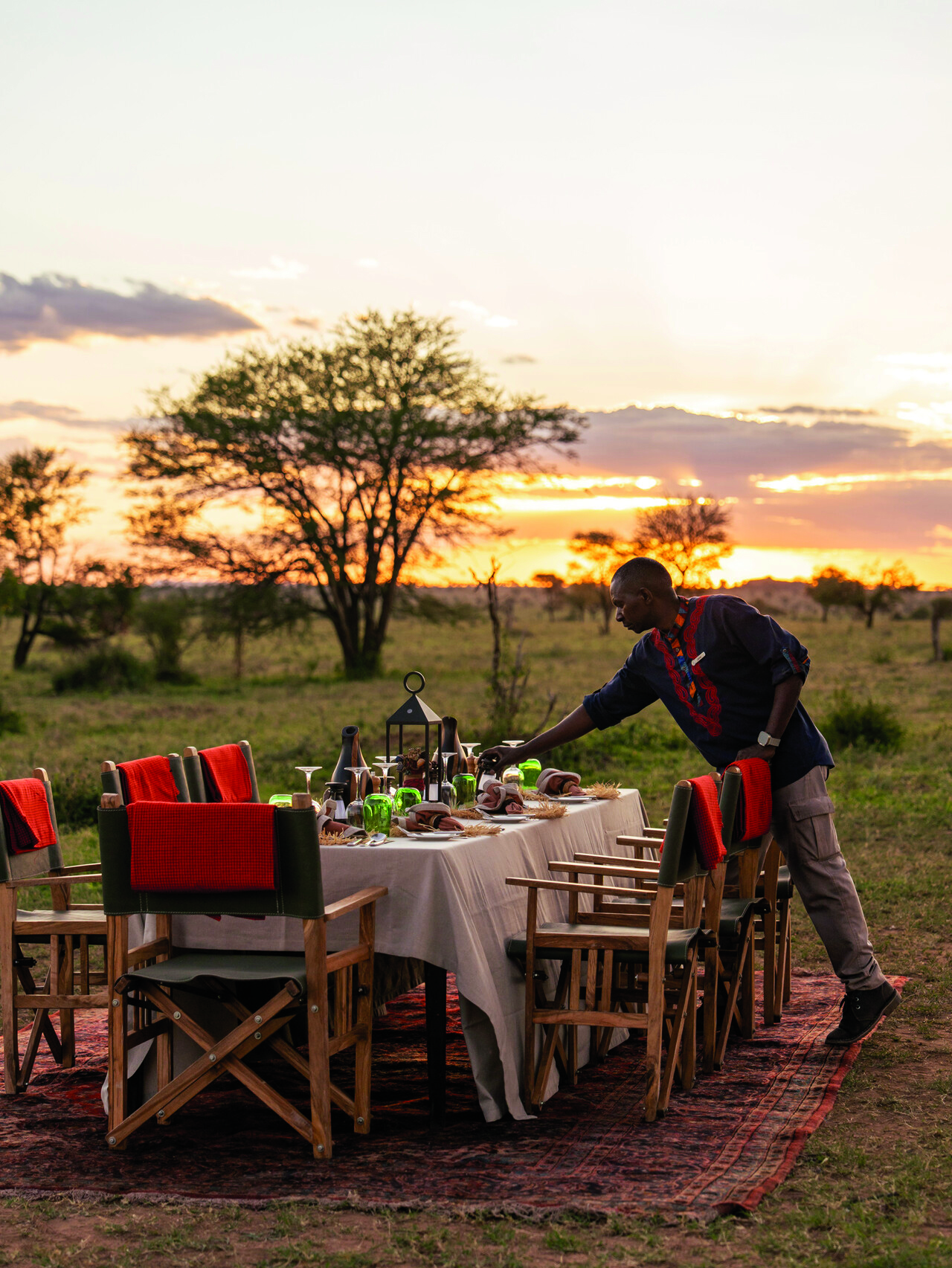Alfresco dining at Four Seasons Safari Lodge Serengeti
As midday approaches, kick back on the Maji Bar and Terrace for lunch with an intrusive but friendly hyrax, no bigger than a housecat, who vies with chirping robin-chats and weavers for your breadcrumbs. In the evening, dinner at Boma Grill offers gourmet dining and a traditional performance by Maasai people, complemented by local staff who teach Swahili phrases like _asante sana_ (“thank you very much”).
[](https://www.fourseasons.com/magazine/from-the-magazine/black-rhino-serengeti/)
[](https://www.fourseasons.com/magazine/from-the-magazine/insiders-guide-to-venice/)
Source : Four Seasons Magazine
Share this story