Analysis · Mandarin Oriental
AI Hotel Recommendations: Half The Answers, One Demolished Hotel
A recent audit of AI-powered luxury hotel recommendations reveals a disturbing lack of diversity and accuracy. Across six major U.S. markets, only a handful of properties dominate suggestions, while one AI even recommended a hotel that no longer exists.
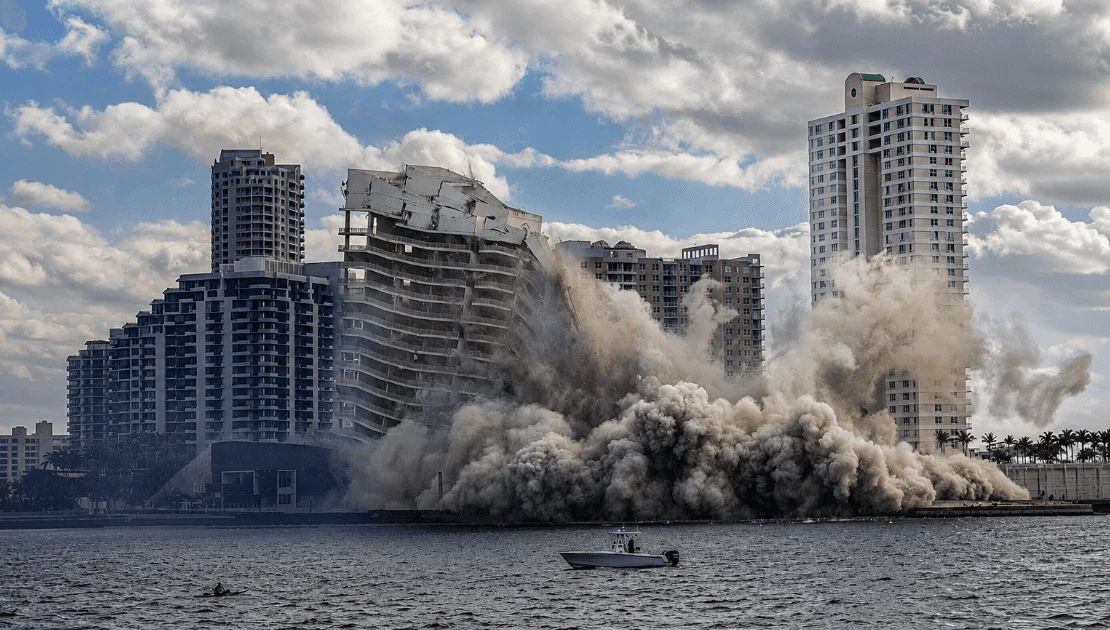
Mandarin Oriental Miami implosion on April 12, 2026, showing a building collapsing into dust.
On August 3, 2026, a single-day audit of 824 AI hotel recommendations across six U.S. luxury markets found a startling lack of breadth. According to Hospitality Net, just 23 properties accounted for half of all recommendations. More concerning, one recommended hotel in Miami had been demolished 108 days prior.
The study, conducted by Americas Great Resorts (AGR) for their Luxury Hotel AI Visibility Index, queried ChatGPT, Google AI Mode, and Gemini across New York City, Los Angeles, Chicago, Miami, Maui, and Napa Valley. Each of the 180 queries was run manually, in a fresh private browser, on July 29, 2026.
Results indicated that in the average market, five properties captured 50% of all AI recommendations. In Chicago, Maui, and Napa Valley, this concentration was even tighter, with four hotels dominating half the results. Andrew Paul, Managing Director of Americas Great Resorts, noted that the Mandarin Oriental Miami, which was imploded on April 12, 2026, was still being recommended five times by AI platforms on July 29, 2026.
What this means: This isn't just about AI hallucinating; it's about the inherent biases and limitations of current models. If these systems are predominantly recommending the same few properties, travelers are missing out on a vast array of luxury experiences. The inclusion of a demolished hotel underscores a fundamental failure in real-time data integration, questioning the reliability of AI as a primary travel planning tool.
Our take: The promise of AI in travel is vast, but its current implementation in luxury hotel recommendations is deeply flawed. Relying solely on these algorithms risks a homogenized travel experience, overlooking hidden gems and avant-garde properties. Until AI can demonstrate greater accuracy, broader discovery, and real-time awareness of the physical world, discerning travelers will continue to turn to curated editorial and expert human advice.
Source : Hospitality Net
Share this story